You Won’t Believe What Vancouver’s Buildings Can Tell You
Walking through Vancouver feels like flipping through a living architecture book—each neighborhood tells a different story. From glass skyscrapers reflecting the mountains to heritage buildings whispering history, the city’s design blends nature and innovation in ways I never expected. What makes its skyline so magnetic? It’s not just how it looks, but how it feels—like every structure belongs. This is architecture you don’t just see—you experience it.
First Impressions: Skyline Meets Nature
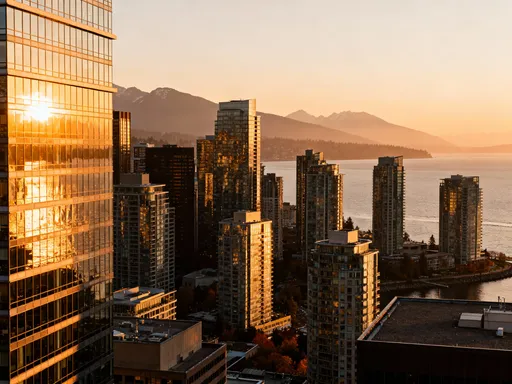
Vancouver’s skyline is unlike any other in North America. Where most major cities grow outward or upward without regard for natural boundaries, Vancouver is cradled by geography—flanked by the Coast Mountains to the north and the Pacific Ocean to the west. This unique positioning has deeply influenced its architectural evolution. The city’s tallest buildings rise in careful conversation with their surroundings, designed not to dominate but to complement. The result is a vertical cityscape that feels organic rather than imposed. This harmony is no accident; it is the product of decades of deliberate urban planning that prioritizes view corridors. These protected sightlines ensure that residents and visitors can still see glimpses of snow-capped peaks and shimmering waters from key vantage points across downtown.
One of the most striking examples of this balance is the Living Shangri-La, once the tallest building in Western Canada. Standing at 201 meters with 62 floors, its slender form tapers gracefully toward the sky, minimizing its visual impact while maximizing interior space. Its curved glass façade reflects the ever-changing light of the surrounding landscape—sometimes mirroring the deep blue of the ocean, other times glowing with the golden hues of sunset over Grouse Mountain. The building’s design responds not only to aesthetic concerns but also to environmental ones. Engineered to withstand seismic activity common in the region, it incorporates advanced damping systems that reduce sway during earthquakes. This blend of beauty and resilience reflects a broader philosophy in Vancouver’s architecture: form follows both function and place.
The city’s commitment to preserving natural vistas extends beyond individual buildings. View corridors are legally protected zones that restrict building height and placement to maintain sightlines to landmarks such as the North Shore Mountains and English Bay. These policies mean that even as Vancouver grows denser, its residents retain a constant visual connection to nature. For a city that consistently ranks among the world’s most livable, this integration of urban development and natural beauty is not a luxury—it is a core principle. Whether viewed from Stanley Park’s seawall or from a café window on Granville Street, the skyline tells a story of restraint, respect, and thoughtful design.
Downtown’s Glass Forest: Where Modern Meets Function
In the heart of downtown, a forest of glass towers rises in elegant succession, each one contributing to what architects call the “vertical urban village.” This concentration of high-rise living is more than a response to limited land—it’s a model of sustainable density. The shift toward glass-clad skyscrapers began in the late 20th century but has evolved significantly in the 21st, with an emphasis on energy efficiency, natural light, and occupant well-being. Today’s towers are not just tall; they are intelligent. Many feature double-skin façades that reduce heat loss in winter and solar gain in summer, helping to lower energy consumption. Automated shading systems and high-performance glazing allow residents to enjoy panoramic views without sacrificing comfort or efficiency.
One of the most celebrated examples of functional modern architecture is the Vancouver Convention Centre West. Completed in 2009, it stands on a former industrial waterfront site transformed into a vibrant public space. The building’s most distinctive feature is its six-acre living roof—the largest in Canada—covered in indigenous plants that support local pollinators and help manage stormwater runoff. Beneath the surface, the convention center uses a seawater heating and cooling system, drawing cold water from the depths of the harbor to regulate indoor temperatures. This innovative approach reduces greenhouse gas emissions by over 50 percent compared to conventional systems. The building is not only a hub for international events but also a symbol of how large-scale infrastructure can coexist with ecological responsibility.
Beyond individual innovations, the downtown core exemplifies the shift toward mixed-use developments. These complexes combine residential, commercial, retail, and sometimes cultural spaces within a single footprint, reducing the need for car travel and fostering walkable communities. The success of this model lies in its ability to create vibrant street life. Ground floors are activated with cafes, grocery stores, and fitness centers, encouraging interaction and convenience. As families, professionals, and retirees choose high-rise living, the city has adapted to ensure these spaces feel human, not impersonal. Balconies, sky gardens, and communal lounges offer opportunities for relaxation and connection, reinforcing the idea that density does not have to come at the cost of quality of life.
Gastown’s Cobbled Charm: Stepping Into the Past
Just a short walk from the glass towers of downtown lies Gastown, Vancouver’s oldest neighborhood and a living museum of 19th-century architecture. Cobbled streets, gaslit lamps, and ornate brick facades transport visitors back to the city’s origins as a small logging settlement. Founded in 1867 by Jack Deighton, a charismatic bartender known as “Gassy Jack,” the area quickly became a commercial hub with warehouses, saloons, and shops built from local stone and red brick. Many of these structures still stand today, preserved through strict heritage conservation laws that protect their exteriors while allowing for modern interiors. This adaptive reuse model has breathed new life into old buildings, transforming former factories into art galleries, boutique hotels, and craft breweries.
The most iconic landmark in Gastown is the steam clock, a whimsical timepiece powered by the neighborhood’s underground steam heating system. Installed in 1977, it chimes every quarter-hour with a melody that echoes through the narrow streets, drawing tourists and locals alike. While the clock itself is a modern creation, it symbolizes the area’s blend of history and innovation. Nearby, the Dominion Building—completed in 1907—stands as one of Canada’s first skyscrapers. At 12 stories, it was once the tallest building in the British Empire west of Chicago. Its Beaux-Arts façade, complete with terra cotta detailing and arched windows, has been meticulously restored, serving as a reminder of the craftsmanship that defined early urban construction.
Preserving Gastown’s character has not been without challenges. As property values rise and development pressure increases, the city has had to strike a delicate balance between progress and preservation. Heritage designation ensures that original façades, rooflines, and materials remain intact, but it also allows for creative reinterpretation inside. A former warehouse might now house a design studio with exposed beams and industrial lighting, blending old-world charm with contemporary aesthetics. These spaces appeal particularly to small business owners and artists seeking authenticity in an increasingly homogenized urban landscape. For families exploring the city on weekends, Gastown offers a tactile connection to the past—one that feels both educational and enchanting.
West End & Kitsilano: The Human-Scale Urban Fabric
Away from the soaring towers of downtown, neighborhoods like the West End and Kitsilano demonstrate a different approach to urban living—one that prioritizes human scale, green space, and community interaction. These areas are defined by mid-rise buildings, typically ranging from four to twelve stories, arranged in a way that maximizes sunlight, ocean views, and pedestrian access. This design philosophy, known as “Vancouverism,” emerged in the 1980s as a response to the impersonal nature of high-density developments elsewhere. It emphasizes livability over sheer height, creating environments where people can walk, cycle, and socialize without feeling dwarfed by concrete and glass.
In the West End, tree-lined streets and mixed-use buildings create a village-like atmosphere within minutes of downtown. Many apartment complexes feature retail spaces on the ground floor—bookstores, bakeries, yoga studios—inviting residents to engage with their surroundings daily. Balconies are wide and often planted with flowers or herbs, turning private spaces into extensions of the streetscape. The area is also home to some of the city’s most diverse populations, including long-time seniors, young professionals, and immigrant families. This demographic mix is supported by thoughtful planning: parks, community centers, and public plazas are distributed evenly, ensuring that everyone has access to shared amenities.
Kitsilano, located further west along the waterfront, takes this model even further. Known for its relaxed, beach-town vibe, the neighborhood combines low-rise housing with extensive green spaces and recreational facilities. The famous Kitsilano Pool, an outdoor saltwater pool stretching into English Bay, is a summer destination for families. Nearby, the Arbutus Greenway—a former railway line turned walking and cycling path—connects residents to other parts of the city while preserving a green corridor through urban land. Building heights here are carefully staggered, with taller structures placed inland and shorter ones near the water, ensuring that views and sunlight are shared equitably. This attention to detail reflects a broader commitment to equity and well-being in urban design.
Public Spaces Designed for Connection
Architecture in Vancouver extends far beyond walls and roofs—it shapes how people interact with one another. Public spaces are designed not as afterthoughts but as essential components of the urban experience. One of the most influential figures in this approach was architect Arthur Erickson, whose vision emphasized openness, accessibility, and democratic design. His work on Robson Square transformed a former provincial courthouse site into a multi-level plaza that invites gathering, protest, performance, and rest. Cascading water features, native plantings, and wide granite steps create a dynamic environment where people of all ages feel welcome. The adjacent Vancouver Art Gallery’s front steps have become an unofficial stage for everything from yoga classes to marriage proposals, proving that well-designed spaces naturally foster connection.
Another example is the Seawall, a 28-kilometer path that loops around Stanley Park and extends into downtown and beyond. Originally built in the 1970s, it is now one of the city’s most beloved public assets, used by cyclists, joggers, and strollers alike. Its success lies in its simplicity: wide, smooth, and barrier-free, it accommodates a wide range of users while offering uninterrupted views of water and mountains. Along the way, benches, lookout points, and public art installations encourage pauses and reflection. The Seawall is not just a path—it is a social spine that stitches together neighborhoods and people.
Transit hubs also play a role in shaping public life. Stations like Waterfront and Commercial-Broadway are designed with natural light, clear signage, and open layouts that reduce stress and improve navigation. Public seating, bike storage, and retail kiosks make waiting time productive and pleasant. These spaces acknowledge that commuting is not just about movement but about experience. When people feel safe, comfortable, and seen in public areas, they are more likely to participate in community life. Vancouver’s investment in inclusive, well-maintained public spaces sends a clear message: the city belongs to everyone.
Innovative Sustainability: Green Buildings Leading the Way
Vancouver has set ambitious environmental goals, including becoming the greenest city in the world by 2050 and achieving zero emissions from new buildings by 2030. These targets are not just aspirational—they are being realized through concrete policy and innovative design. The city’s Zero Emissions Building Plan requires all new constructions to meet increasingly stringent energy standards, pushing developers to adopt low-carbon materials, renewable energy systems, and passive design principles. One of the most transformative trends is the use of mass timber in high-rise construction. Unlike steel and concrete, which have high embodied carbon, engineered wood products like cross-laminated timber (CLT) store carbon and require less energy to produce.
A leading example is the Wood Innovation and Design Centre in Prince George—a pilot project that inspired similar developments in Vancouver. Standing at eight stories, it was one of the tallest modern wooden buildings in North America when completed in 2014. Its success demonstrated that mass timber could be safe, durable, and aesthetically pleasing. Today, Vancouver is seeing a new generation of hybrid timber structures, particularly in mid-rise residential buildings. These projects combine wood frames with concrete cores, offering fire resistance and structural stability while reducing the building’s carbon footprint by up to 30 percent.
Green roofs, once considered a niche feature, are now standard in many new developments. They help insulate buildings, manage stormwater, and provide habitat for birds and insects. Passive house standards, which focus on ultra-efficient insulation, airtight construction, and heat recovery ventilation, are also gaining traction. These buildings use up to 90 percent less energy for heating and cooling than conventional ones, significantly lowering utility costs for residents. For families concerned about both environmental impact and long-term affordability, these innovations offer peace of mind. Vancouver’s leadership in green building is not just about technology—it’s about creating healthier, more resilient homes for future generations.
The Future Skyline: What’s Next for Vancouver’s Architecture?
As Vancouver continues to grow, its architectural challenges are evolving. With a population expected to exceed 700,000 in the coming decades, the city must find ways to accommodate more residents without sacrificing its livability. Emerging hubs like Brentwood, Metrotown, and Southeast False Creek are being redeveloped with taller towers, expanded transit access, and enhanced public spaces. These areas aim to create complete communities where people can live, work, and play without relying on cars. However, this growth must be balanced with concerns about affordability, climate change, and community input. Architects and planners are increasingly turning to modular construction, which allows for faster, more cost-effective building while maintaining high design standards.
Rising sea levels pose another critical challenge, particularly for low-lying areas near the Fraser River and Burrard Inlet. New developments are incorporating elevated foundations, permeable surfaces, and flood-resistant materials to adapt to changing conditions. At the same time, the city is investing in green corridors—linear parks and urban forests that cool neighborhoods, absorb carbon, and provide wildlife habitat. These spaces are not just environmental assets; they are social ones, offering places for relaxation, play, and connection.
Community engagement is also becoming a cornerstone of the design process. Residents are being invited to participate in workshops, surveys, and design charrettes to shape the future of their neighborhoods. This inclusive approach ensures that development reflects local needs and values, rather than being imposed from above. Whether it’s preserving a beloved corner store or ensuring a new tower doesn’t block sunlight to a community garden, these conversations matter. The future of Vancouver’s architecture lies not in isolated monuments but in connected, responsive environments that grow with the people who inhabit them.
Vancouver’s architecture isn’t just about aesthetics—it’s a reflection of values: sustainability, inclusivity, and respect for nature. As the city grows, its buildings continue to balance innovation with identity, offering a blueprint for urban living that feels both modern and deeply human. The real masterpiece? A city that builds not just upward—but outward, together.