You Won’t Believe What I Found in Guanajuato’s Hidden Alleyways
Guanajuato, Mexico, isn’t just another colorful town on the map—it’s a living maze of stories carved in stone. Wandering its narrow streets, I stumbled upon something few travelers notice: architecture that defies logic and time. Think tunnels beneath the city, pastel buildings clinging to hillsides, and plazas that feel like movie sets. This isn’t just sightseeing—it’s stepping into a dream. Let me take you where guidebooks don’t.
First Impressions: A City That Defies Expectations
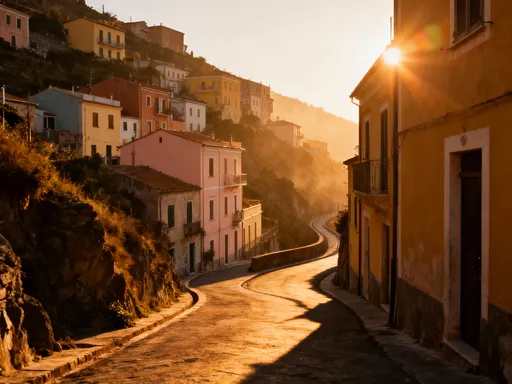
Arriving in Guanajuato feels like stepping into a world that refuses to follow the rules. Nestled in a steep valley in central Mexico, the city unfolds in layers—visually, historically, and emotionally. The first thing that strikes visitors is the color. Buildings blaze in saffron yellow, sky blue, and rose pink, stacked so tightly along the hillsides that they appear to grip the earth for balance. The air carries a crisp mountain freshness, a relief from the heat of lower elevations, and every breath seems to carry the faint echo of distant guitar music.
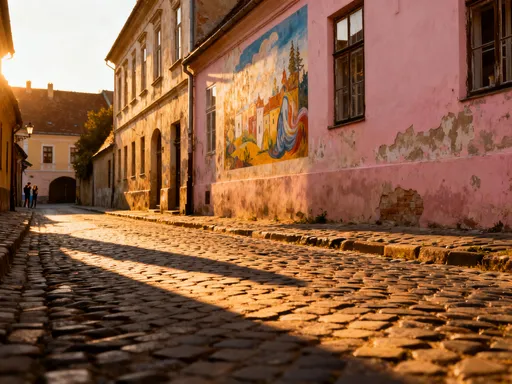
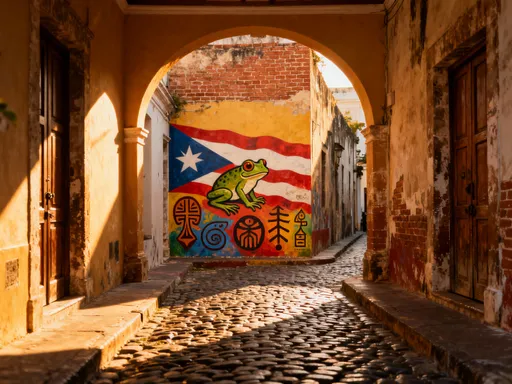
The streets here don’t obey a grid. Instead, they twist and turn like ribbons caught in the wind, rising sharply with uneven cobblestones that test the strength of your calves and the grip of your shoes. Cars navigate alleyways so narrow that mirrors often brush against walls. This is not a city built for convenience—it was shaped by necessity, by terrain, and by centuries of adaptation. Yet, despite its challenges, Guanajuato feels welcoming, almost intimate, as if it’s whispering secrets to those willing to listen.
Sensory details enrich the experience: the scent of freshly baked pan dulce drifting from a corner bakery, the rhythmic clang of a tram bell echoing through a canyon-like street, the sudden burst of mariachi music from an open doorway. These sounds and smells aren’t staged for tourists—they’re woven into the fabric of daily life. The city’s colonial past is evident in its stone façades and wrought-iron grilles, but its spirit is anything but frozen in time. Guanajuato is a place where history lives, breathes, and evolves with each passing day.
The Underground World: Tunnels Beneath the Streets
Beneath Guanajuato’s vibrant surface lies a network of tunnels that once saved the city from destruction. Originally carved in the 18th century to divert floodwaters from the Guanajuato River, these subterranean passages were later repurposed into roadways when urban planners realized their potential. Today, they form a functional, if surreal, part of the city’s transportation system. Driving through them feels like entering another dimension—dimly lit, echoing with the hum of engines, and lined with rough-hewn stone walls that still bear the marks of pickaxes from centuries ago.
For first-time visitors, the experience can be disorienting. One moment you’re in sunlight, surrounded by color and noise; the next, you’re underground, navigating a tunnel that curves unexpectedly and seems to go on forever. Some of these passageways stretch for kilometers, connecting different parts of the city in ways that defy above-ground logic. While most are reserved for vehicles, certain pedestrian-accessible sections allow visitors to walk through history, feeling the cool, damp air and running their hands along the ancient rock.
I remember pausing in one such walkway, the sound of my footsteps bouncing off the walls, and realizing how few cities in the world have transformed a threat—flooding—into a solution so ingeniously. These tunnels didn’t just prevent disaster; they became part of Guanajuato’s identity. Engineers and laborers, many of them indigenous workers under colonial rule, chiseled these paths by hand, creating a legacy that continues to serve the city today. It’s a testament to human ingenuity and resilience, hidden just beneath our feet.
Hillside Homes: Where Gravity Seems Optional
If the tunnels define Guanajuato’s underground, the hillside homes define its skyline. Perched on steep slopes with breathtaking audacity, these houses seem to defy gravity, stacked so closely that neighbors could almost pass a cup of sugar from one balcony to the next. Painted in bold, unapologetic colors—tangerine, cobalt, magenta—they create a visual symphony that changes with the light. At sunrise, the eastern façades glow like embers; by late afternoon, shadows stretch across the alleys, turning the city into a play of light and depth.
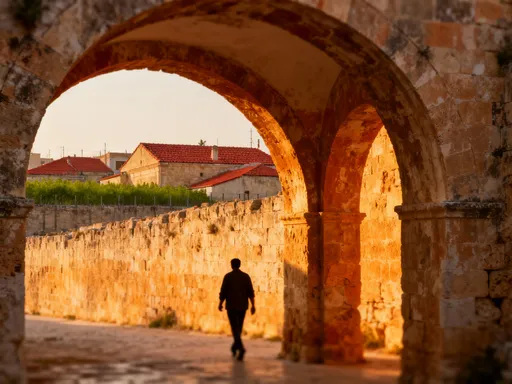
Building homes on such inclines required extraordinary engineering. Foundations had to be anchored deep into the rock, and many structures rely on retaining walls and terraced support systems to prevent landslides. Yet, despite the challenges, the city expanded upward, not outward, creating a vertical community where staircases replace streets and rooftops become walkways. Narrow footpaths, often no wider than a person’s shoulders, connect different levels, winding through gardens, under archways, and past tiny shrines adorned with flowers.
Life on the hills is both poetic and practical. Laundry flutters between buildings like colorful flags, cats leap effortlessly from one tile roof to another, and children race down staircases after school. From certain vantage points, like the viewpoint at El Pípila, the entire city unfolds like a mosaic—a patchwork of red roofs, winding alleys, and plazas nestled in the folds of the valley. It’s impossible not to marvel at how beauty emerged from such difficult conditions. These homes aren’t just places to live; they’re declarations of perseverance, painted in the brightest hues imaginable.
Plazas That Tell Stories: The Heart of Community Life
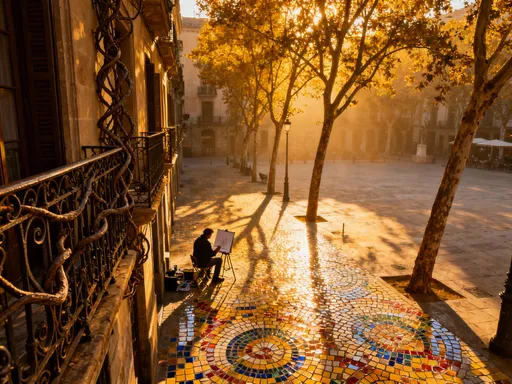
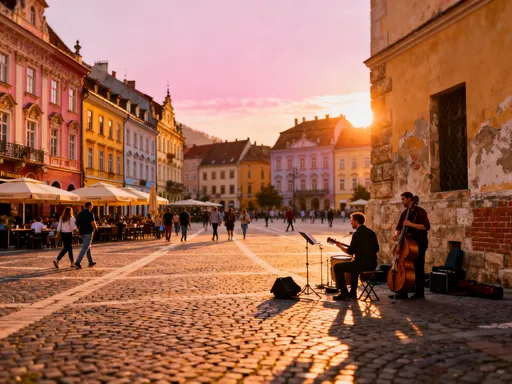
In a city defined by movement and elevation, the plazas serve as anchors—places of rest, gathering, and celebration. Among the most beloved is Jardín de la Unión, the central square that pulses with life from morning until late evening. Ringed by colonnaded walkways and shaded by leafy trees, it’s where locals sip coffee, tourists consult maps, and street musicians earn their keep with melodies that drift into surrounding shops and cafes. The ornate bandstand at its center hosts weekend performances, drawing families who spread blankets on the grass to listen.
Another gem is Plaza de San Fernando, quieter but no less significant. Located near the Alhóndiga de Granaditas—a historic grain store turned museum and cultural center—this plaza exudes old-world charm. Baroque lampposts cast a warm glow at dusk, and the surrounding buildings feature intricate stonework and wooden balconies that hint at the city’s colonial elegance. It’s common to see elderly couples strolling arm in arm, or groups of friends sharing stories over glasses of atole, a traditional warm drink made from masa and cinnamon.
These plazas are more than decorative spaces—they are the social heart of Guanajuato. They reflect a deeply rooted Mexican tradition of community life played out in public view. Unlike sterile, modern urban parks, these squares feel lived-in and cherished. They’ve hosted political rallies, religious processions, and countless informal gatherings over the centuries. The architecture surrounding them—churches, government buildings, historic homes—speaks of Spanish influence, but the way people use these spaces reveals a distinctly Mexican warmth and openness. Here, history isn’t confined to museums; it’s performed daily in the laughter, music, and footsteps that fill the air.
Theaters and Temples: Grandeur in Unexpected Corners
Amid the maze of alleys and staircases, Guanajuato surprises with moments of grandeur. The Teatro Juárez stands as one of the most striking examples—a Neoclassical masterpiece with a pink façade and a dome that catches the last light of day. Inside, the auditorium is a jewel box of gilded carvings, velvet drapes, and a ceiling painted with allegorical scenes. Every detail, from the hand-laid tile floors to the ornate chandeliers, speaks of craftsmanship that time has not diminished.
Equally impressive is the Basílica de Nuestra Señora de Guadalupe, a sanctuary that rises gracefully at the city’s edge. Though less flamboyant than the cathedral in Mexico City, this basilica carries a quiet dignity. Its twin bell towers frame a rose window that glows during sunrise, and the interior is lined with marble columns and religious art that reflects both European and indigenous influences. Pilgrims visit year-round, but the atmosphere remains serene, a place for reflection rather than spectacle.
What makes these buildings so powerful is not just their beauty, but their context. They don’t stand in isolation; they emerge unexpectedly from narrow streets, as if the city itself is revealing its treasures one at a time. You might turn a corner after climbing a steep staircase and suddenly find yourself face-to-face with a façade so ornate it takes your breath away. These structures were built during periods of great wealth, fueled by silver mining, yet they were designed not just for the elite, but for the community. The theater hosted operas for miners and merchants alike; the basilica welcomed worshippers from all walks of life. Their grandeur is not cold or distant—it feels human, accessible, and deeply meaningful.
Walking the Callejoneadas: Architecture in Motion
To truly understand Guanajuato, you must experience the *callejoneadas*—nightly processions that transform the city’s alleys into stages of music, storytelling, and celebration. Led by groups called *musketeros*, these parades wind through the narrowest passages, accompanied by drums, flutes, and guitars. Participants, both locals and visitors, follow behind, clapping, singing, and laughing as they climb staircases and duck under arches.
The tradition dates back centuries, originating as a form of street theater and community bonding. Today, it remains one of the most authentic ways to connect with the city’s spirit. As the procession moves, guides share legends—some historical, some whimsical—about the buildings, the tunnels, and the people who shaped Guanajuato. One story tells of a miner who discovered silver in the 1500s; another recounts a love affair between a nobleman’s daughter and a commoner, said to have ended tragically on one of the hillside paths.
What makes the *callejoneadas* so special is how they animate the architecture. The city, which by day feels like a postcard, becomes alive at night—its walls echoing with song, its plazas filling with warmth and movement. You begin to see the alleys not as obstacles, but as corridors of memory and connection. The experience teaches a valuable lesson: Guanajuato cannot be rushed. It reveals itself only to those who walk slowly, who listen closely, and who allow themselves to be carried along by its rhythm.
Why Guanajuato’s Architecture Matters Today
In an age of cookie-cutter cities and disappearing heritage, Guanajuato stands as a powerful reminder of what is possible when communities value their history. Unlike destinations that have been overdeveloped for tourism, Guanajuato has managed to preserve its authenticity while embracing change. Homes are still lived in, shops still serve locals, and traditions like the *callejoneadas* continue to thrive because they matter to the people who call this city home.
Preservation efforts are ongoing, supported by both government programs and grassroots initiatives. Residents take pride in maintaining their colorful façades, repairing historic tiles, and passing down knowledge of traditional crafts. The city’s designation as a UNESCO World Heritage Site in 1988 has helped protect its integrity, but the real guardians are the everyday citizens who understand that their home is not just a monument, but a living, breathing entity.
Tourism plays a role, of course. Visitors bring economic vitality and global attention, but the city has avoided the trap of becoming a museum piece. There are no fake markets or staged performances designed solely for cameras. Instead, tourists are invited into real life—into plazas where families gather, into tunnels that serve real drivers, into alleys where music still rises naturally from open windows.
Guanajuato’s architecture, born from geological challenges, colonial history, and human creativity, offers more than aesthetic pleasure. It teaches resilience. It shows how constraints—steep hills, flooding rivers, limited space—can inspire innovation rather than defeat. It reminds us that beauty doesn’t have to be perfect to be profound; sometimes, it’s the irregularity, the asymmetry, the unexpected turn of a street that makes a place unforgettable.
So if you go to Guanajuato, don’t just take pictures. Walk without a map for a while. Let yourself get lost. Listen to the city. Feel the cobblestones under your feet, the cool air in the tunnels, the warmth of a plaza at sunset. Let the colors sink into your memory. This is not just a destination—it’s a lesson in how places can endure, adapt, and inspire across centuries. And in that, Guanajuato offers something rare: a living testament to the enduring power of place, people, and imagination.