What I Ate When I Checked Into Nadi, Fiji – A Food Lover’s First Day Revelation
Stepping off the plane in Nadi, Fiji, my stomach was growling louder than the tropical downpour outside. Forget fancy resorts—my real mission began at the roadside markets and local eateries. This isn’t just about coconut bread or fresh fish; it’s about how Fijian food culture welcomes you like family. From the warmth of a lovo feast to the tang of rourou, every bite tells a story. Let me take you through the flavors that turned my arrival into a feast.
First Impressions: The Smell of Nadi Before You See It
The moment the aircraft door opened, a thick, warm wave of air rolled in—humid, fragrant, and alive with the scent of rain-soaked earth and something smoky, sweet, and deeply inviting. It wasn’t perfume or air freshener; it was the natural aroma of a tropical city waking up to another sun-drenched day. As I walked toward the terminal, the mingling scents of wood smoke, ripe mango, sea salt, and frying dough wrapped around me like an invisible welcome mat. This wasn’t the sanitized scent of air conditioning and jet fuel—it was the real breath of Nadi, raw and unfiltered.
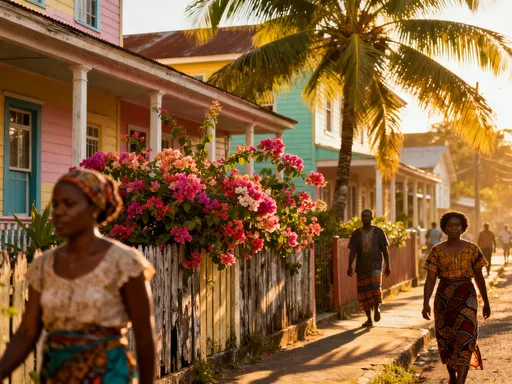
Outside, the roadside came alive with movement. Small stalls lined the path from the airport to the taxi rank, each one offering a glimpse into daily Fijian life. A vendor flipped golden-brown curry puffs in a shallow pan of oil, their edges crisping in the morning heat. Nearby, a woman in a vibrant sulu arranged bunches of green bananas and glossy taro leaves on a wooden table, her movements quick and practiced. The air was punctuated by sizzling oil, distant chatter, and the occasional call of a myna bird perched on a power line. It was sensory overload in the best possible way—no brochure could capture this symphony of smell, sound, and color.
I paused at one stall where a man handed out samples of freshly baked sausage rolls dusted with cumin and turmeric. The first bite was a revelation: flaky pastry giving way to a spiced, meaty filling that warmed me from the inside. It wasn’t gourmet—it was real, honest food made for people who live, work, and eat with their hands. In that moment, I realized that my journey into Fijian culture wouldn’t begin at a resort pool or a guided tour. It began here, on a dusty roadside, with a $1 snack and a smile from a stranger.
This early immersion taught me something important: in Nadi, food isn’t an afterthought. It’s the first language of hospitality. The city doesn’t wait to impress you with polished presentations or curated experiences. It offers you a taste of itself immediately, unfiltered and full of heart. By choosing to follow my nose instead of heading straight to my hotel, I stepped into a deeper, more authentic rhythm of life—one where meals are not just eaten, but felt.
Market Culture: Where Locals Eat and Socialize
If Nadi has a beating heart, it’s the Municipal Market. Tucked between bustling streets and shaded by corrugated metal roofs, this open-air bazaar is where food, community, and tradition converge. From dawn until early afternoon, vendors from outer islands and nearby villages arrive with baskets brimming with produce, fish, and handmade goods. This is not a tourist attraction staged for cameras—it’s a working marketplace where Fijians come to shop, chat, and connect over the week’s harvest.
Walking through the market is an education in color, texture, and scent. One stall overflows with rounds of taro, their earthy skins still clinging to red soil. Another displays baskets of dalo leaves, carefully bundled for cooking. A fishmonger arranges glistening snapper, walu, and octopus on crushed ice, each catch labeled with the name of the village it came from. The air hums with conversation—vendors calling out specials, mothers haggling over prices, children darting between stalls with bags in hand. There’s a rhythm here, a natural flow that feels both chaotic and perfectly ordered.
What struck me most was the warmth of interaction. A woman selling homemade coconut chutney didn’t just hand over a jar—she offered a spoonful on a piece of flatbread, watching my face for a reaction. When I smiled, she laughed and said, “Good, yes? My grandmother’s recipe.” Another vendor, an older man with sun-weathered hands, insisted I try his dalo chips—crispy, golden slices fried in coconut oil. “For visitors,” he said with a wink, “we give extra crunch.” These weren’t sales tactics; they were gestures of inclusion, tiny invitations to belong.
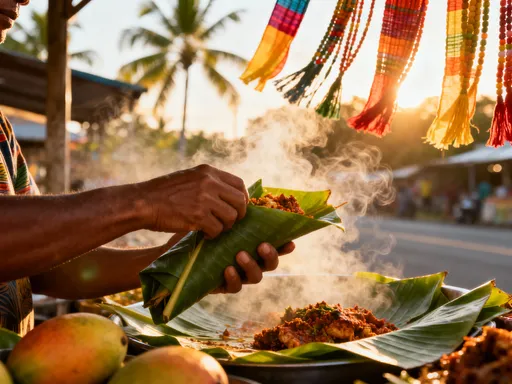
I spent nearly an hour watching a grandmother teach her granddaughter how to wrap banana leaf parcels for a lovo. Her fingers moved with precision, folding the leaves into neat bundles filled with fish, taro, and coconut milk. “This is how we feed each other,” she told me, not looking up. “Not just food—love.” In that moment, I understood that the market isn’t just about transactions. It’s about continuity, about passing down knowledge, and about the quiet pride of offering something made by hand. For travelers, this is where authenticity lives—not in staged performances, but in the everyday acts of preparation, sharing, and care.
Street Food Staples: What to Try Right After Landing
Within an hour of arriving in Nadi, I had tasted three essential street foods that would become my daily companions: sausage rolls, fried cassava with chili dip, and coconut water straight from the nut. These aren’t gourmet dishes served on fine china—they’re portable, hearty, and perfectly suited to the tropical climate. More than that, they’re entry points into Fijian flavor, each one offering a distinct taste of the island’s culinary soul.
The sausage roll, a legacy of British colonial influence with a South Asian twist, is a staple at nearly every roadside stall. Baked fresh in the morning, the pastry is flaky and slightly golden, infused with cumin, turmeric, and a hint of chili. The filling—a blend of spiced minced meat and onions—is rich without being heavy, designed to satisfy hunger quickly. I found the best ones at a small cart near the bus station, where the vendor, a woman named Laisa, has been serving them for over twenty years. “People come back,” she told me, “even after they leave Fiji. They say, ‘This tastes like home.’”
Fried cassava, another must-try, offers a different kind of satisfaction. Thick slices of the starchy root vegetable are deep-fried until golden and served with a fiery chili-lime dip. The contrast is perfect: soft and creamy inside, crisp on the outside, with a dip that wakes up your taste buds. It’s messy to eat—fingers get greasy, and chili sauce drips—but that’s part of the charm. This isn’t food for the neatly dressed or the easily startled. It’s for those who don’t mind getting a little dirt on their hands in exchange for real flavor.
And then there’s the coconut. Not from a bottle, not from a carton—but cracked open right in front of you with a machete. The vendor slices off the top, inserts a straw, and hands it over with a smile. The water inside is cool, slightly sweet, and impossibly refreshing after a walk under the midday sun. It’s nature’s perfect drink, and in Nadi, it’s everywhere. Some vendors even offer a second taste—the soft, jelly-like meat scooped out with a spoon. Eating like this, standing on the sidewalk with juice running down my wrist, I felt more connected to the island than I had during any guided tour.
These street foods are more than snacks—they’re survival tools for the tropics, cultural markers, and social connectors. They’re also incredibly affordable, with most items costing less than $2. For travelers, especially women traveling alone or in small groups, they offer a safe, accessible way to explore local cuisine without committing to a full meal. And because they’re eaten on the go, they invite interaction—vendors remember your face, ask how you liked it, and sometimes throw in an extra piece “just because.”
Fusion on a Plate: How Cultures Cook Together in Nadi
Fiji’s food story is one of convergence. Over centuries, waves of migration—Indian indentured laborers, Chinese traders, European settlers, and Pacific Islanders—have shaped a cuisine that is uniquely blended yet deeply rooted. In Nadi, this fusion isn’t a trendy restaurant concept or a marketing gimmick. It’s the everyday reality of what people eat, how they cook, and how they share meals across cultural lines.
You can taste this harmony in a single plate. At a modest takeaway near the wharf, I ordered seared walu (butterfish) served with roti and a side of palusami. The fish, seasoned with lemon and sea salt, was tender and flaky, cooked over a wood fire. The roti, flaky and warm, had been kneaded and stretched by hand. And the palusami—taro leaves slow-cooked in coconut milk and onions—added a creamy, earthy depth. No single culture claims this meal. Instead, it’s a quiet collaboration: Fijian ingredients, Indian technique, and Pacific Island tradition.
This blending extends to spice, too. While traditional Fijian food is often mild, the Indian influence brings warmth through turmeric, cumin, and coriander. You’ll find curry goat served beside lovo-cooked pork, and roti parcels filled with spiced lentils and potatoes sold at the same stalls that offer coconut bread. Even desserts reflect this mix—koko (Fijian cocoa) might be sweetened with jaggery, a cane sugar common in Indian cooking.
What makes this fusion authentic is its lack of pretense. There are no “fusion menus” with elaborate descriptions or Instagram-worthy plating. Instead, the blending happens naturally, in home kitchens and roadside stalls where recipes are passed down through generations. A Fijian-Indian family might serve curry one night and a lovo feast the next, not as a statement, but as a reflection of who they are.
For visitors, this means every meal is an opportunity to taste history. The spices tell stories of ships crossing the Indian Ocean. The use of coconut milk speaks to centuries of island living. And the shared tables—where Fijians, Indo-Fijians, and tourists sit side by side—show that food, more than any policy or proclamation, has the power to bring people together. In Nadi, you don’t need a lecture on multiculturalism. You just need to take a bite.
Hotel vs. Local Eats: Where Real Flavor Lives
Luxury resorts in Fiji are known for their beautifully presented lovo dinners—elaborate buffets where guests are treated to traditional dishes in a polished, scenic setting. And yes, the food is good: tender meats, perfectly cooked root vegetables, and elegant plating. But after attending one such dinner at a high-end resort, I sought out a village lovo to compare. The difference was not just in taste, but in feeling.
The resort version was clean, efficient, and visually stunning. The pork was slow-cooked, the fish flaked just right, and the palusami was creamy. But something was missing—the smokiness, the charred edges, the slight grit of earth that clings to food cooked in an underground oven. It felt sanitized, as if the wildness of the experience had been ironed out for comfort.
Contrast that with the village lovo I attended a few days later. Held in a small community hall, the event was loud, joyful, and slightly chaotic. The oven had been prepared since dawn, stones heated for hours before meat and vegetables were wrapped in banana leaves and buried. When the earth was dug up, the aroma was overwhelming—smoky, rich, and deeply savory. The pork had crispy skin, the fish was infused with coconut milk, and the dalo was earthy and sweet. People ate with their hands, laughing, passing plates, and refilling bowls without ceremony.
That meal taught me an important lesson: authenticity isn’t about perfection. It’s about presence. The roadside stall with the wobbly table and the vendor who calls you “sister” will often serve you something more memorable than any five-star restaurant. The flavors are bolder, the experience richer, and the connection more real. Hotels have their place—they offer safety, comfort, and convenience. But if you want to taste Fiji as it’s truly lived, you have to step outside the gates.
It’s not about rejecting luxury. It’s about balance. Enjoy your resort breakfast, but save room for a midday roti from a street vendor. Sip cocktails by the pool, but also accept an invitation to a village feast. Because in Nadi, the most meaningful meals aren’t served on linen—they’re shared on plastic mats, under open skies, with people who call you “bubu” (friend) after one conversation.
Must-Know Food Etiquette: Eating Like a Local
In Fiji, food is more than sustenance—it’s an act of relationship. How you eat, how you receive, and how you respond matters. Learning a few simple customs can transform a meal from a transaction into a connection. For women travelers, especially those visiting alone or in small groups, understanding these unspoken rules can open doors to deeper experiences and warmer welcomes.
First, food is almost always shared. Meals are served in large platters or bowls, and everyone eats from the same dish. It’s common to use your right hand—forks and spoons are often optional. When offered food, it’s polite to accept, even if just a small portion. Refusing can be seen as rejecting the host’s generosity. I learned this quickly when an elder offered me a piece of grilled breadfruit. I hesitated, not knowing what it was, but her smile encouraged me. One bite later, I was asking for more.
Another key phrase to know is vinaka vakalevu—thank you very much. Say it before and after meals, and especially when receiving food as a gift. It’s a small gesture, but it shows respect. If you’re invited into a home, bringing a small offering—like a bag of rice, a box of tea, or a bunch of bananas—is a traditional way to say thank you. It’s not expected, but it’s appreciated.
Pacing matters, too. Fijians eat slowly, savoring each bite and enjoying conversation. Rushing through a meal can seem disrespectful, as if you’re eager to leave. Instead, linger. Ask questions. Compliment the cook. Let the meal unfold naturally. I found that the longer I stayed, the more stories were shared—the recipe for a particular curry, the history of a dish, the name of the fish I was eating.
Finally, always accept a second helping if offered. It’s a sign that the host wants you to feel full and cared for. If you’re truly full, it’s okay to politely decline, but do so with a smile and another vinaka. These small acts—eating with your hands, speaking a few Fijian words, staying a little longer—build trust. And trust, in Nadi, is the secret ingredient to the best meals.
Practical Tips for Food-Focused Travelers in Nadi
For women who travel to experience culture through food, Nadi offers endless opportunities—but a few smart choices can make the journey smoother and safer. First, carry small bills. Most street vendors and market sellers don’t carry change for large notes, and breaking a $20 can be a hassle. Keep a small pouch with $1, $2, and $5 bills for easy transactions.
Hydration is key in the tropical heat, but be cautious with water. Stick to bottled or filtered water, and avoid ice unless you’re sure it’s made from purified water. Fresh coconut water, however, is perfectly safe and widely available. It’s naturally sterile, rich in electrolytes, and deliciously refreshing.
Visit the market in the morning for the best selection. Fish, produce, and baked goods arrive early, and the atmosphere is at its most vibrant. By mid-afternoon, many stalls begin to close, and the heat can be overwhelming. If you’re hoping to try something specific—like a homemade chutney or a special type of roti—go early.
Don’t be afraid of spice, but know that Fijian food is generally mild. Heat comes from side sauces—chili-lime blends, pepper pastes, or fresh green chilies—offered separately. You control the level, so feel free to ask for “a little hot” or “no spice.” Most vendors are happy to adjust.
One of the most important rules: ask before taking photos. While some vendors don’t mind, others find it intrusive. A simple smile and a question—“Can I take a picture of your food?”—goes a long way. Often, the answer is yes, and sometimes it leads to a free sample or a cooking tip. I once asked to photograph a woman’s banana leaf parcels and ended up learning how to fold them myself.
Finally, engage. Don’t just point and order. Ask, “What’s good today?” or “What do locals eat?” These small conversations often lead to the best recommendations. A vendor might hand you a sample of something new, or point you to a hidden stall around the corner. In Nadi, food is a conversation, not a menu. And every bite is an invitation to belong.
Conclusion
Nadi doesn’t just feed your body—it feeds your soul. Its food culture is a living welcome mat, woven from tradition, warmth, and generosity. Every meal becomes a check-in not just to a place, but to a way of life. The flavors are bold, the portions hearty, and the hospitality endless. But more than that, the way food is shared—openly, joyfully, without pretense—reveals the heart of Fijian culture.
So when you land, skip the airport lounge. Walk past the rental car counters and the taxi queue. Follow the scent of wood smoke and frying dough. Head straight to the market, say bula, and let the first bite tell you: you’ve truly arrived. Because in Nadi, the best way to know a place isn’t by seeing it—but by tasting it, one shared meal at a time.